
Study in Switzerland
Swiss hospitality schools are the benchmark for the industry worldwide, built around paid internships that alternate with academic terms. Fees are the highest of any destination, but internship income offsets a meaningful share of them.
- Tuition
- US$27,700/yr
- Living
- US$10,400/yr
- Total
- US$38,100/yr
- Work rights
- Paid internships built into the programme
- Post-study
- Limited; qualification is globally portable
Current position
Policy for international students
- Hospitality programmes alternate academic semesters with paid internships, typically four to six months each, which offset part of the cost.
- Internship placements are arranged by the school and count as part of the qualification rather than as unrestricted work rights.
- Non-EU graduates have limited post-study work rights in Switzerland itself, but Swiss hospitality qualifications carry strong recognition across the Middle East, Asia and Europe.
- Proof of funds covering tuition and living for the full year is required at visa stage.
Cost
What a year in Switzerland costs
Adjust the level, city and scholarship percentage to see the effect on your annual total.
Scholarships: Swiss hospitality schools award merit scholarships of 10-25% of tuition, and paid internships return roughly 2,000-2,500 CHF per month.
Estimated annual cost
US dollars, indicative
Indicative US dollars per year. Actual fees depend on the institution and programme; confirm before you commit.
Admission
Entry requirements
- High school graduate, aged 18 or over
- IELTS 5.5 or equivalent
- High school graduate, aged 18 or over
- IELTS 5.5-6.0 or equivalent
- High school graduate plus at least three years of work experience, depending on the profile, or
- A bachelor's degree in any field
- Aged 21 or over
- IELTS 5.5 or equivalent
- Bachelor's degree, or a recognised postgraduate diploma depending on the institution
- Aged 21 or over
- IELTS 6.0-6.5 or equivalent
- Relevant work experience depending on the course and institution
Funding
Scholarships & financial support
Swiss hospitality schools award merit scholarships of 10-25% of tuition, and paid internships return roughly 2,000-2,500 CHF per month.
Awards are almost always decided at the point of admission rather than afterwards, and most pools are allocated on a rolling basis. Applying early in the cycle is the single biggest thing within your control.
At a glance
- Work during study
- Paid internships built into the programme
- After graduation
- Limited; qualification is globally portable
- Baseline tuition
- US$27,700/yr
- Baseline living
- US$10,400/yr
Subjects
What Switzerland is strong in
- Culinary Arts & Pastry
- Hospitality & Service Management
- Business & Entrepreneurship
- Luxury Brand Management
Institutions
Where to study in Switzerland
12 institutions in our directory, across 2 categories.
-
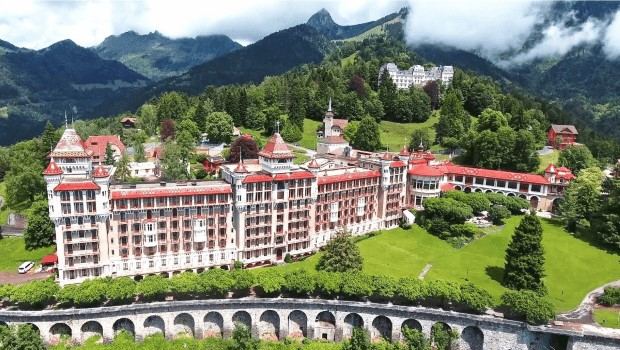
Swiss Hotel Management School (SHMS) Caux & Leysin
-
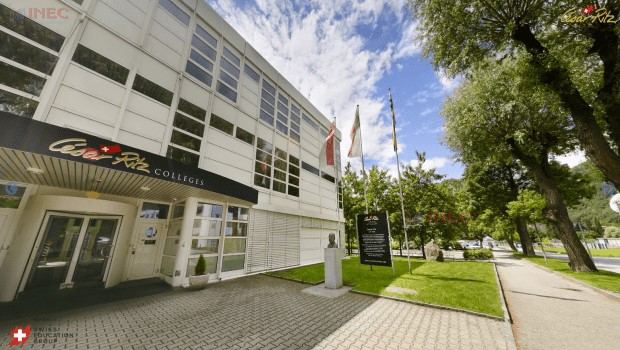
César Ritz Colleges Le Bouveret & Brig
-
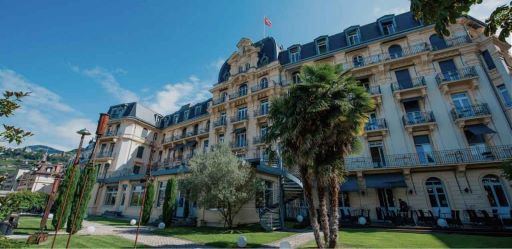
Hotel Institute Montreux (HIM) Montreux
-
Culinary Arts Academy Switzerland Le Bouveret & Lucerne
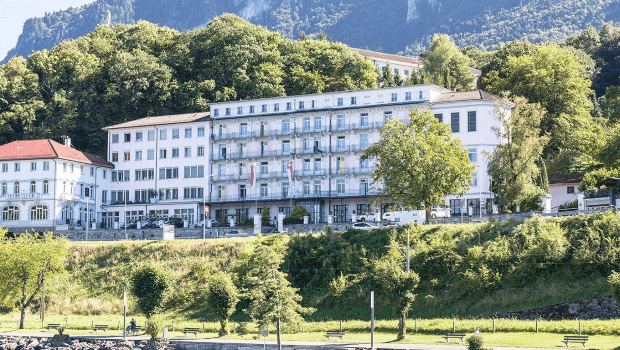
-
BHMS Business & Hotel Management School Lucerne
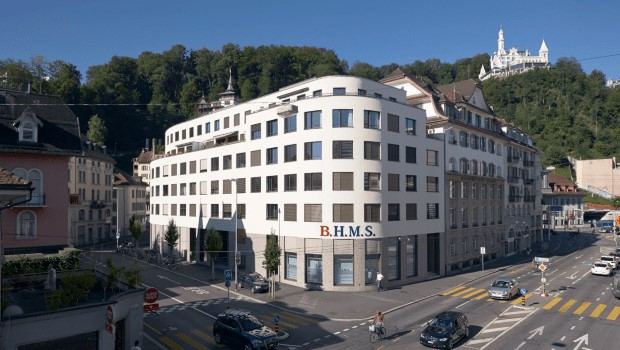
-
Glion Institute of Higher Education Glion & Bulle
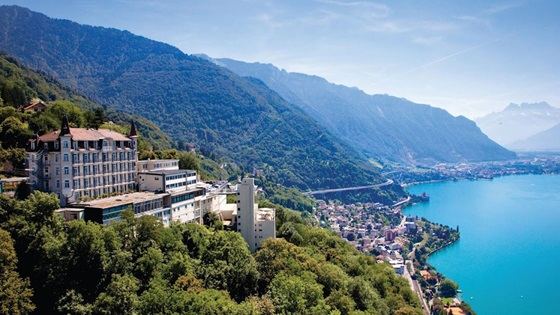
-
Les Roches Crans-Montana
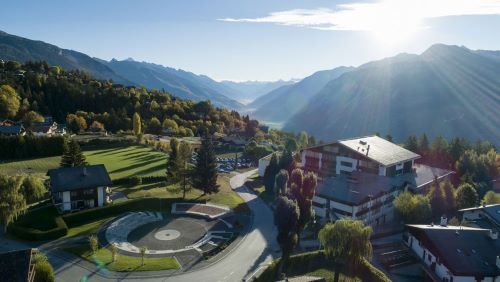
-
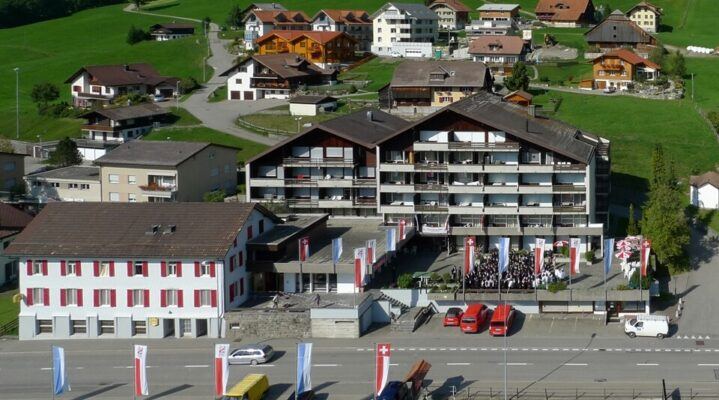
Hotel and Tourism Management Institute (HTMI) Sörenberg
Immigration
The Switzerland student visa
- Courses longer than 90 days require a national D visa, applied for at the Swiss embassy in Hanoi.
- You need the admission letter, proof that tuition has been paid, evidence of funds for living costs, accommodation confirmation and a written undertaking to leave at the end of the course.
- Processing takes eight to twelve weeks because the application is referred to the cantonal migration office — apply at least three months ahead.
- After arrival you register with the local authority and receive a residence permit covering the study period.
Questions
Frequently asked
How much does a year in Switzerland cost?
About US$38,100 per year including tuition and living — the highest of any destination on this site. Paid internship semesters return a meaningful share of that.
What language will I study in?
Hospitality schools teach in English. Switzerland has four national languages — German, French, Italian and Romansh — and schools generally add a second-language module because the industry values it.
What does the application process look like?
Submit transcripts, an English certificate, a personal statement and, for postgraduate entry, a CV. Most schools interview by video. Offers usually arrive within two to four weeks, and the visa follows once the deposit is paid.
Can I work while studying?
Work rights outside the programme are restricted, but the internship semesters built into Swiss hospitality degrees are paid and typically return 2,000-2,500 CHF per month.
Do Swiss hospitality schools offer scholarships?
Yes — merit awards of roughly 10-25% of tuition, decided at admission based on academic record and interview.
Can I stay and work after graduating?
Post-study work rights for non-EU graduates in Switzerland are limited. The qualification, however, is recognised across the global hospitality industry, and most graduates take roles in the Middle East, Asia, or elsewhere in Europe.
Planning Switzerland for 2026–27?
We will check your profile against the entry requirements, size the real budget and map the scholarship rounds worth applying to.